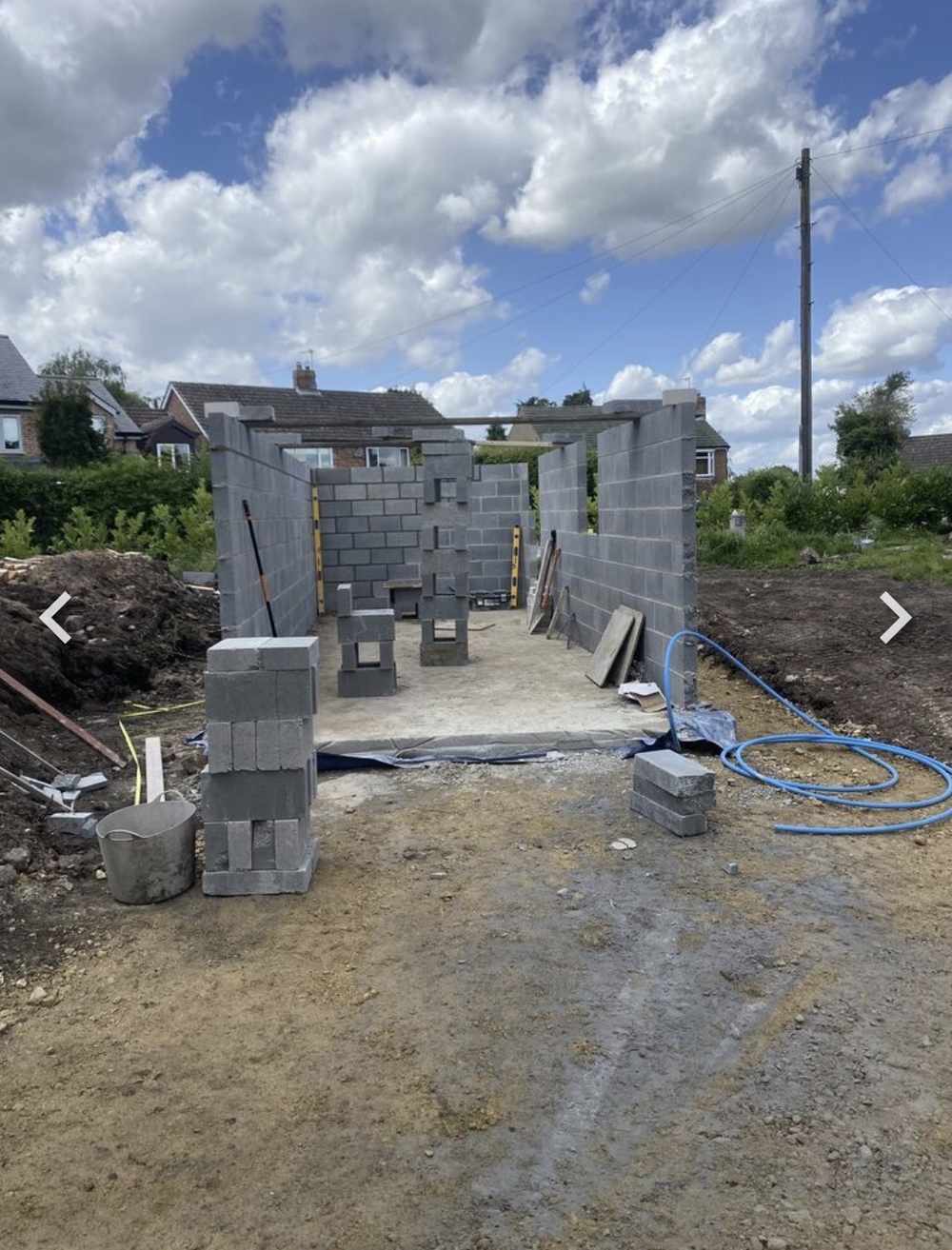
Bricklaying is the foundation of nearly everything we build, from extension walls to garden boundaries, and it's a trade where the quality of the work genuinely shows over time. A well-built brick wall, properly bonded and pointed with the right mortar, will comfortably outlast the people who built it. A poorly built one shows problems within a few years.
RW Builders carries out bricklaying as part of our wider extension, masonry and general building work across York and North Yorkshire, whether that's structural walls for a new extension or standalone brickwork projects.
The pattern bricks are laid in, known as the bond, affects both the strength and appearance of a wall:
Matching the existing bond matters as much as matching the brick colour when extending or repairing an older property, since a mismatched bond is often more visually obvious than a slight colour difference.
Stretcher bond – the most common modern bond, with bricks laid lengthways in overlapping rows, standard for most cavity wall construction
English bond – alternating rows of headers (brick ends) and stretchers (brick lengths), a strong, traditional bond commonly seen on older solid-wall York properties
Flemish bond – headers and stretchers alternating within the same row, a decorative bond often used on Georgian and Victorian buildings where appearance mattered as much as structure
The mortar mix used has a real effect on how a wall performs over time, and this is particularly important on older buildings:
We assess the age and construction of a property before specifying mortar, rather than defaulting to modern cement mixes regardless of what we're working on.
Standard UK bricks measure 215mm x 102.5mm x 65mm, and with standard 10mm mortar joints, this works out to roughly 60 bricks per square metre of single-skin wall. Knowing this helps when planning a project and comparing quotes, since brick quantity, and therefore cost, scales predictably with wall area once you know the wall's dimensions and thickness.

Beyond the wall itself, a bricklaying project typically includes setting out and levelling before the first course goes down, regular checks for plumb (vertical alignment) and level throughout the build, and pointing as the work progresses rather than left until the whole wall is finished, which gives a more consistent joint finish.
Bricklaying for structural work, such as extension walls, is covered under building regulations approval as part of the wider project. Standalone brickwork like garden walls generally doesn't need separate approval unless it exceeds certain heights, in which case planning permission rather than building regulations becomes the relevant consideration.
We're a family-run team based in York, and bricklaying underpins nearly every extension and masonry project we take on across the city and surrounding villages including Haxby, Strensall, Poppleton and Tollerton. We assess the right bond and mortar for your specific property rather than treating every job the same, and every quote is clear and written with no hidden extras.
Excellent job from Phil and his team. Both external and internal works finished to an excellent quality. Happy to deal with changes and kept us informed on a day-to-day basis. Definitely recommend.
RW Builders directly on 01904 530941, or send your details through our contact form, and we'll arrange a visit to discuss your project. Quotes are free and come with no obligation.